Blog
Cainiao: How Alibaba's Logistics Arm Is Building Warehouse After Warehouse Across Europe
Cainiao / 菜鸟网络, Alibaba's logistics arm, rarely makes headlines as often as the trading platform itself, even though it's the one physically delivering goods sold through Alibaba and its cross-border trade services. In 2026 the company noticeably accelerated the buildout of its overseas warehouse network.
From individual warehouses to a network in 18 countries
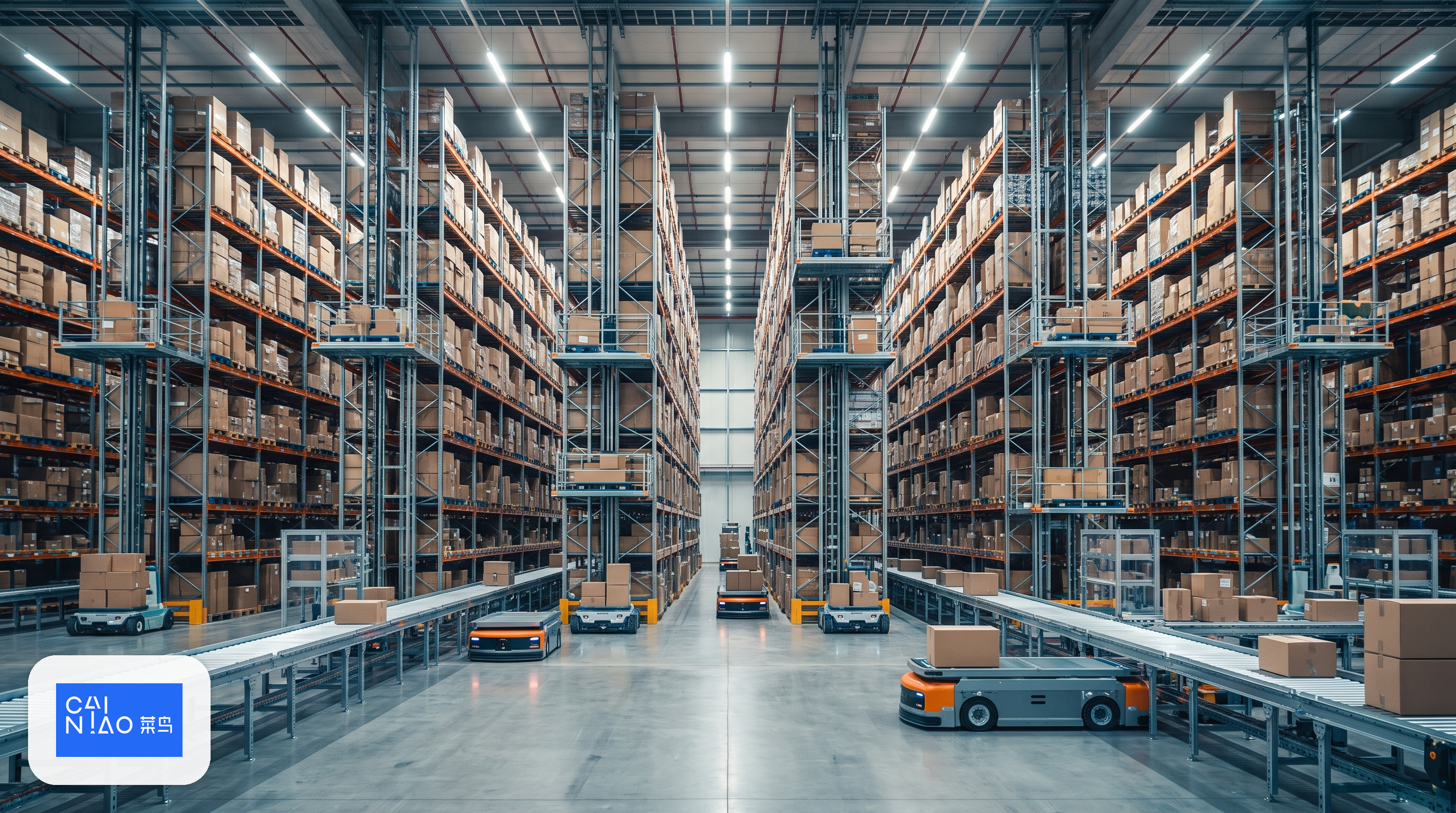
As of June 2026, Cainiao's global network included more than 50 overseas warehouses across 18 countries, spanning Europe, North America and the Asia-Pacific region. In April 2026 alone, the company opened four new warehouses — in the UK, France, Spain and Poland — and in June announced a new large fulfillment center in the Netherlands to serve the entire European market, investing in over 100 of its own climbing robots to automate warehouse operations.
Category-specific warehouse specialization
In 2026, Cainiao plans to open a series of category-specific warehouses across Europe — for instance, dedicated capacity for battery-powered goods, which require special storage and transport conditions, and separate facilities for large-item products. This specialization isn't just floor-space expansion — it's a response to real logistical constraints in cross-border trade: batteries and large furniture can't be stored and shipped the same way as ordinary textiles or electronics.
Growing volumes confirm the strategy
The volume of orders processed through Cainiao's overseas warehouses grew 32% year-on-year in 2025 — a steady pace confirming that the physical infrastructure investment is paying off through rising demand from cross-border sellers who use Cainiao's warehouses as an intermediate storage point closer to the end buyer, rather than shipping every order directly from China.
Why this changes the rules for cross-border trade
Having an overseas warehouse fundamentally changes delivery economics for a seller: the goods are already physically located in the buyer's country or region, cutting delivery time from weeks to days and reducing last-mile cost. It's a direct alternative to the model where every order ships as an individual parcel from China, and it's what makes cross-border trade competitive on speed with local sellers. The logistics chains of China's largest companies — from ports to last mile — can be explored on the China Top-10 Logistics Companies Expedition.
What it means for the market
Cainiao's expansion shows that the next stage of competition in cross-border e-commerce is unfolding less in apps and marketplaces and more in physical infrastructure — the number and location of warehouses, last-mile speed, and the ability to store category-specific goods to regional standards.
Climbing robots as an answer to limited warehouse space
Investing in more than 100 proprietary climbing robots for the new Netherlands center isn't simply automation for the sake of cutting staffing costs. With new warehouse space scarce across densely populated Europe, robotic systems that can move along vertical racking let a facility multiply its storage density within the same building footprint compared to traditional horizontal warehouses with standard forklifts. That matters especially in countries like the Netherlands and the UK, where land for new industrial development is expensive and physically limited.
Why this benefits small sellers, not just big brands
Cainiao's open overseas warehouse infrastructure matters not just to Alibaba and large brands but to small sellers on cross-border platforms who simply can't afford to build their own warehouse in every country they sell into. By renting space within Cainiao's shared infrastructure, such sellers gain access to the same delivery speed as major players — that levels the competitive playing field between small and large cross-border businesses far more than any change to the marketplace itself.
Sources
Overseas warehouse network data drawn from China Daily HK, Warehouse Automation and Cainiao Group materials from 2026.