Blog
Chery: A Car Exported Every 23 Seconds
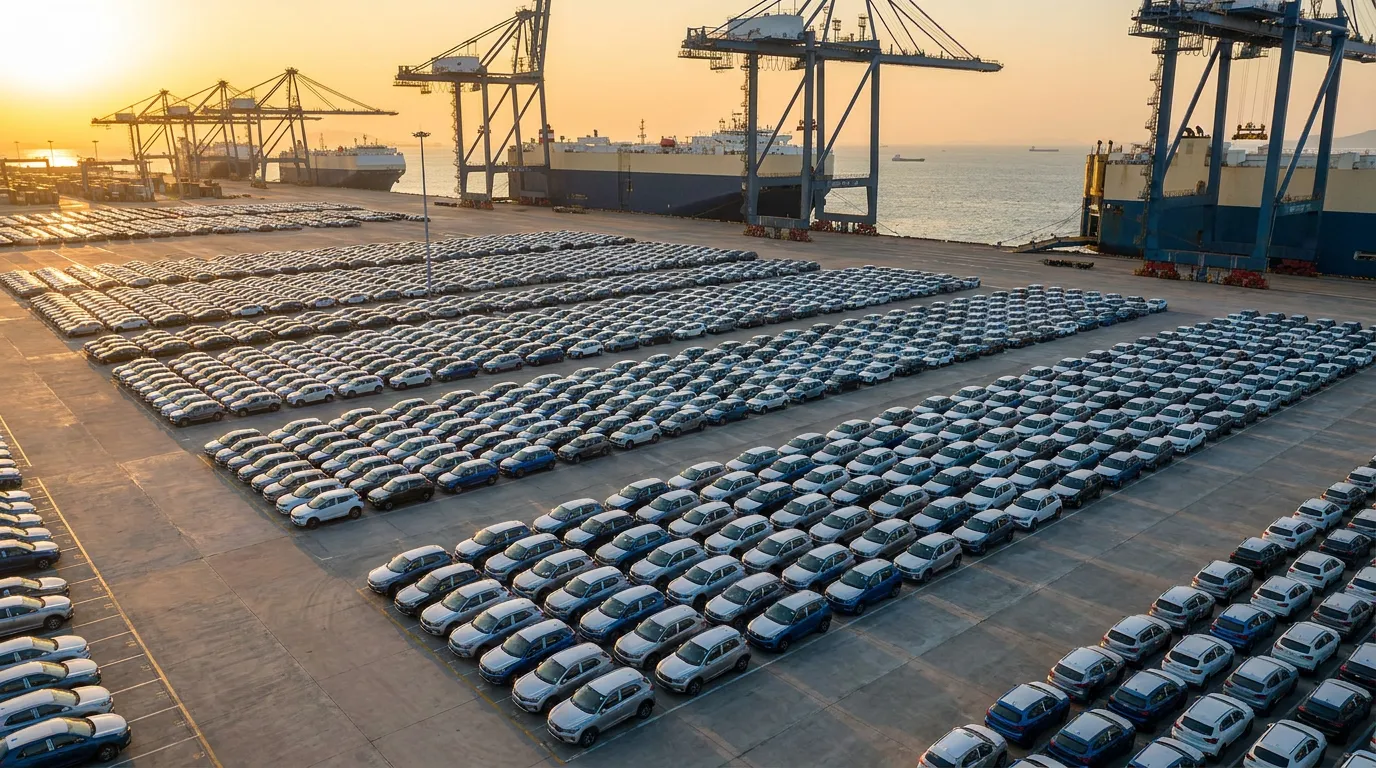
Chery / 奇瑞 has been China's largest passenger car exporter for more than two decades, but 2026 shows just how wide that lead has grown. Over the first seven months of the year the company sold 1,634,353 vehicles (+10.1% year-on-year), and in July it set a single-month export record of 202,533 units — the first time it crossed 200,000. For the first half of 2026, exports totaled 943,817 vehicles, up 71.5% year-on-year.
One company, five export faces
The scale comes down to brand architecture. Inside China the group sells under Chery, Exeed, Jetour and iCar; abroad it sells primarily under Omoda and Jaecoo, which are built as standalone brands overseas rather than rebadged Chery models. This split lets the group cover everything from budget city cars to premium Exeed crossovers under different names without diluting any single brand's positioning. Combined, the Chery, Omoda & Jaecoo, Exeed, Jetour and iCar portfolio now reaches more than 130 countries and regions — from Latin America and the Middle East to Southeast Asia.
Europe, the fastest-growing market
In H1 2026, European sales grew more than 212% year-on-year to 174,000 vehicles — arguably the sharpest growth of any regional direction for the company. Meanwhile cumulative Chery exports since launch have passed 6 million vehicles, and the group's combined sales (domestic plus export) reached 20 million units, with roughly a third of owners now located outside China. For anyone studying Chinese automotive manufacturing up close, this trajectory is a clear example of how an export-oriented strategy gradually reshapes a manufacturer's entire business structure — the China Auto Plants Expedition tour shows exactly the assembly lines and logistics hubs these vehicles ship from.
Why the pace isn't slowing
Chery's export growth isn't just about price. The company has invested systematically in its own ocean shipping capacity and port infrastructure to avoid depending on outside logistics operators at this scale, and splitting the product into local brands (Omoda, Jaecoo) limits reputational risk — a quality issue in one market doesn't automatically carry over to the other lineups.
What it means for partners
For overseas companies working with China's auto industry, the Chery case is above all a lesson in scaling speed: the company grew exports more than 70% in a single year while remaining China's largest car exporter for 23 consecutive years. That points to a mature export model rather than a temporary spike — with stable logistics chains, locally adapted brands, and ready-made infrastructure for different markets.
Its own fleet as insurance against outside freight rates
It's worth noting that Chery is building its own shipping fleet and port infrastructure right now — during a period when car-carrier freight rates have surged due to a global shortage of vehicle-carrying vessels. Companies dependent on outside carriers lose margin or are forced to raise prices during such periods; owning its own vessels gives Chery predictable logistics costs regardless of what's happening on the spot freight market. It's a rare example of an automaker investing not just in factories and dealer networks but, quite literally, in the means of getting the product to the buyer.
Local assembly as the next stage
While the bulk of Chery's exports today are finished vehicles shipped by sea, in a number of countries — including Brazil, Indonesia and Spain — the company is already building or launching local assembly plants. The logic mirrors that of other large Chinese auto groups: local assembly lowers import tariffs, creates jobs in the receiving country (which reduces regulatory pushback), and shortens delivery time to dealers. For markets where Chery currently ships only finished vehicles, the shift to localization is a question of "when," not "if."
Sources
2026 sales and export figures are drawn from EqualOcean, CnEVPost, Gasgoo and CarNewsChina.