Blog
Geely and Zeekr: How One Automaker Runs Seven Brands at Once
Geely / 吉利 has long outgrown the label of "just another Chinese automaker" — it now functions as a holding company over a whole constellation of brands: Geely Auto, the Geely Galaxy new-energy sub-brand, the premium electric marque Zeekr / 极氪, Lynk & Co, plus Swedish Volvo and British Lotus. For 2026 the group set a target of 3.45 million vehicles sold, of which 2.22 million are meant to be new-energy vehicles — a 14% increase over 2025. A separate internal benchmark calls for 750,000 sales outside China.
Different brands, different jobs
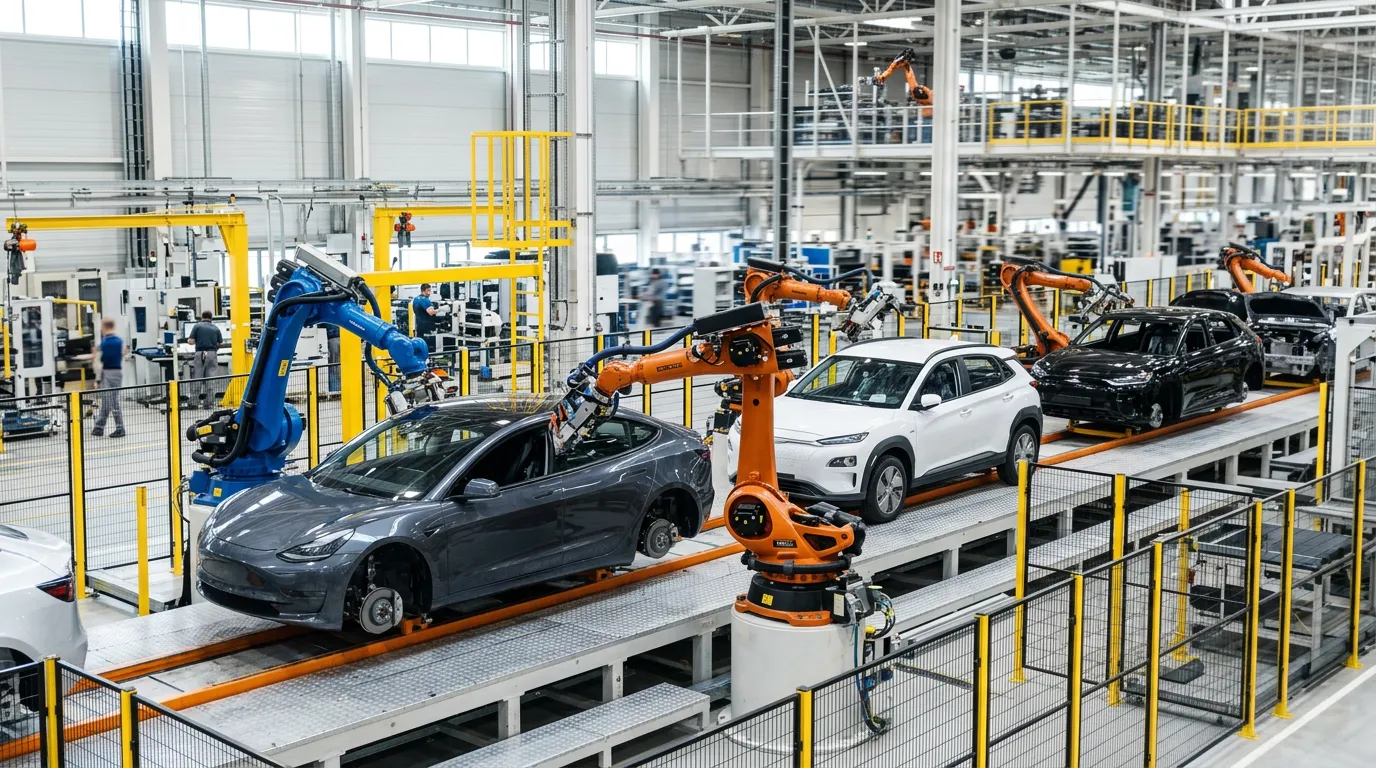
The logic of this architecture isn't duplication — it's division of labor. Zeekr owns the premium tier and the technology story: fast charging, performance, brand cachet for demanding buyers. Geely Galaxy covers the mass-market new-energy segment inside China. Lynk & Co has historically positioned itself as an "urban" brand for younger buyers, while Volvo and Lotus provide access to established European reputations and dealer networks. One of the China plant tours shows exactly how large groups build such multi-brand lineups on shared platforms and shared chassis architecture — worth exploring in the China Auto Plants Expedition.
From exports to localization
The first quarter of 2026 was a record for Geely: 937,900 vehicles sold, with hybrid production and export volumes growing in tandem rather than at each other's expense. But the export model itself is shifting: instead of simply shipping finished cars abroad, the group is moving toward "deep localization" — for instance, planning local assembly of the Geely Xingyuan model in Southeast Asia. By 2026, Zeekr had entered more than 50 countries and regions and opened over 640 branded stores worldwide — a notable feat for a brand not yet five years old.
Volvo takes over Europe for Lynk & Co
The most interesting 2026 move is the agreement under which Volvo will handle Lynk & Co's commercial and brand operations across Europe — marketing, sales channels and after-sales service — in key markets including Germany, France, Spain and Italy. It's a rare case of a "subsidiary" Chinese brand leaning on its Swedish parent's existing European dealer and service infrastructure instead of building a network from scratch. For potential partners and suppliers, it's a signal: Chinese auto groups are increasingly entering Europe through existing local structures rather than direct export alone.
What's behind the 640-store figure
Zeekr's overseas retail model deserves a closer look on its own: 640 branded locations across more than 50 countries isn't a conventional franchise dealer network — it's a hybrid of company-owned showrooms and partner locations operating under a single service standard and a unified after-sales system. For a brand that entered international markets less than five years ago, that pace of store openings shows a deliberate choice of a capital-intensive, direct-control retail model over cheaper but harder-to-manage franchising — a bet that a consistent customer experience matters more than scaling at any cost.
Why the Volvo link makes sense right now
The decision to hand Lynk & Co's European commercial operations to Volvo is also worth reading against regulatory pressure: the EU has imposed additional tariffs on Chinese electric vehicles, and brands European consumers perceive as at least partly "European" end up in a more favorable position. Leaning on Volvo's existing network isn't just a distribution cost saving — it's also a way to reduce reputational risk tied to being perceived as a purely Chinese brand during a sensitive period for trade relations.
What it means for the market
New-energy vehicles already account for more than half of the group's sales, and exports are growing at triple-digit year-on-year rates. For anyone considering partnerships with Chinese automakers or component suppliers, Geely's structure is a good illustration of how a single corporate perimeter can hide several genuinely different brand strategies, price segments and logistics chains at once — and why working with "a Chinese auto group" can mean very different terms depending on which specific brand is actually involved.
Sources
Sales and strategy data for Q1 and H1 2026 are drawn from industry coverage by Gasgoo, Automotive World and ChinaEVHome.