Blog
How Proya overtook the global giants on their own turf
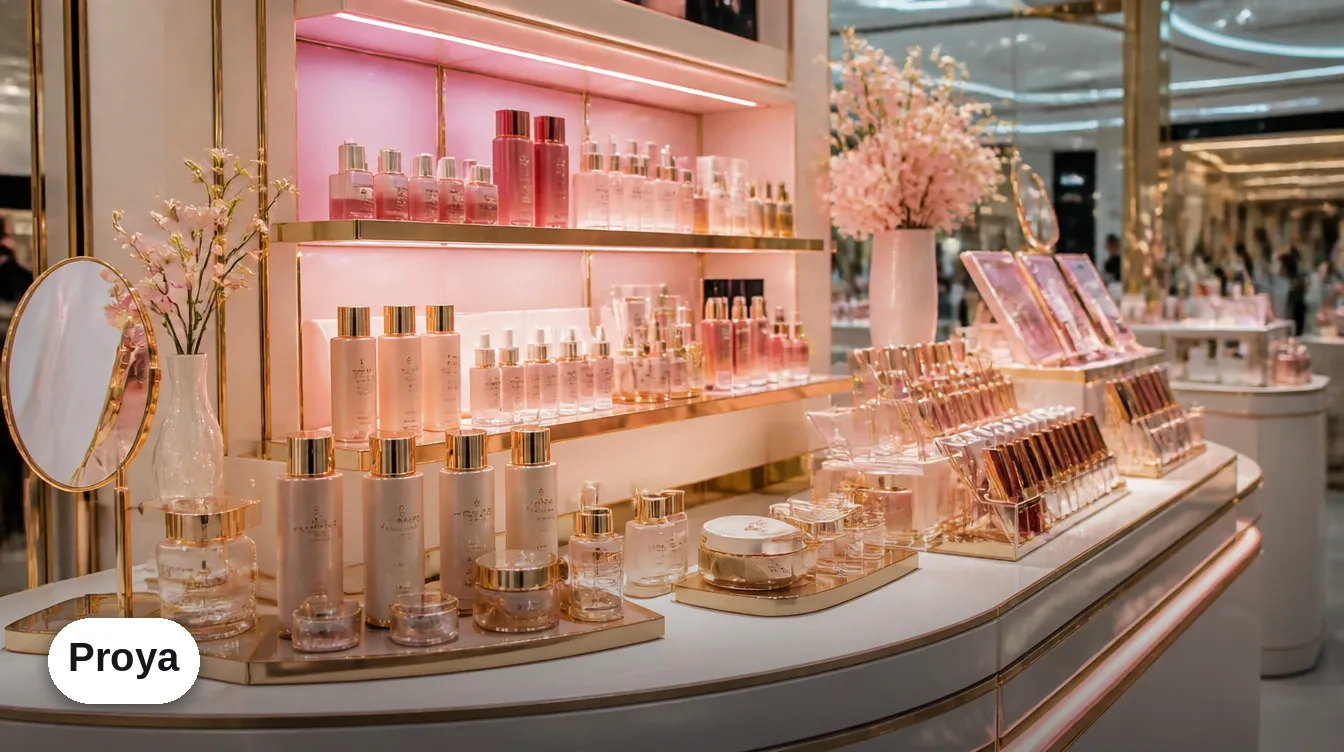
A decade ago, "Chinese beauty brand" sounded like an oxymoron to most Russian buyers — the market was associated with copies of Western formulas. In 2024, Proya (珀莱雅) became the first Chinese beauty brand to cross 10 billion yuan in annual revenue — the exact figure is 10.78 billion yuan (about $1.5 billion), up 21% year over year, a seventh straight year of double-digit growth.
Guochao: not patriotism, a specific product
The trend is called guochao (国潮) — literally "national wave." But it isn't about a flag on the packaging; it's that Chinese brands like Proya and Pechoin learned to build formulas for specific Chinese skin and climate needs faster and cheaper than global giants that take years to adapt worldwide lineups. While Estée Lauder and L'Oréal report slowing growth in China, local brands keep growing at double-digit rates.
What's next for Proya
In the first half of 2025 the company announced plans to list in Hong Kong — funding needed for international expansion after domestic growth began to slow. A new generation of leadership headed by Hou Yameng (son of co-founder and chairman Hou Junqcheng) set a target: at least 50 billion yuan (about $7 billion) in revenue and a spot in the global top 10 beauty groups within a decade, including through acquisitions of Western brands.
Who else is in this field
Proya isn't alone: Florasis (花西子, Hangzhou) grew on aesthetics tied to traditional Chinese culture, Yatsen (完美日记 / Perfect Diary, Guangzhou) is a mass-market and social-media story that was the first to show a Chinese brand could compete on recognition with international mass-market lines. Each has its own recipe, but the common denominator is speed — how fast the product adapts to the local consumer.
Why this is worth seeing in person
Revenue reports don't show how formula development, testing, and logistics actually work at a brand that ships a new line faster than an international competitor can finish a local market study. That's exactly the subject of the China's Beauty & Anti-Age Industry Expedition — seeing the development and production cycle from the inside, not from an analyst's report.