Blog
Haidilao Abroad: 127 Restaurants on Four Continents and Rising Margins
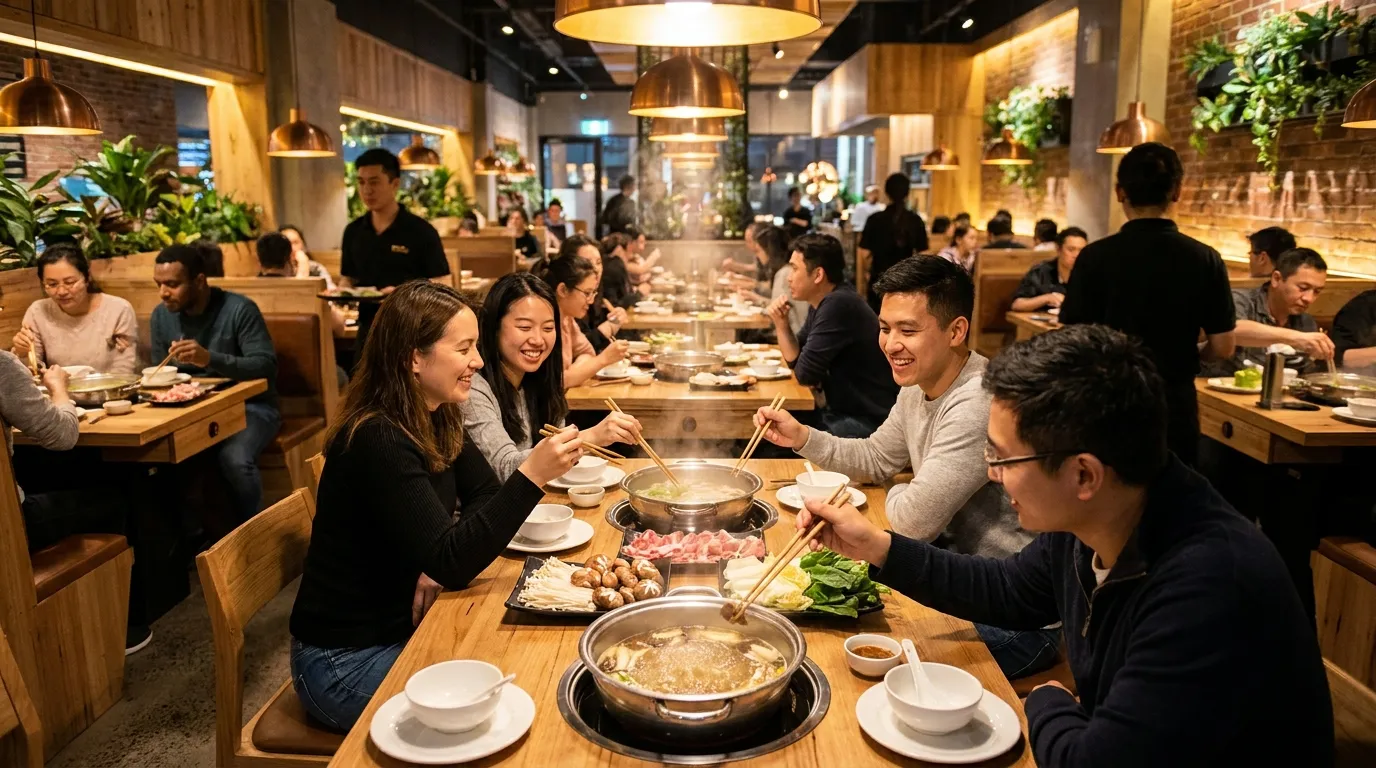
While the parent Haidilao / 海底捞 chain remains China's largest hotpot brand domestically, its overseas arm has been spun off into a separately listed company, Super Hi International — and it's a good illustration of what mature international expansion by a Chinese restaurant brand looks like, rather than one-off trial openings.
Steady growth without dramatic swings
In Q1 2026, Super Hi's revenue rose 14.2% year-on-year to $225.9 million, while operating profit jumped 70.7% to $14.0 million, lifting the operating margin from 4.1% to 6.2%. This isn't explosive but steady growth: restaurant revenue grew 8.4%, while the delivery and other-business segment surged 130.9% — meaning the company is diversifying revenue sources rather than relying solely on dine-in seating.
A network on four continents
As of March 31, 2026, Super Hi had 127 self-operated Haidilao restaurants across 14 countries on four continents — growth driven by higher foot traffic and table turnover rather than new-location openings alone: average table turnover held at 4.0 times per day, and same-store sales rose 4.0%. That means existing restaurants are running more efficiently, not just that new addresses are being added to inflate revenue on paper.
Why hotpot is an easy export format
The hotpot format itself eases internationalization: the guest cooks their own food in tabletop broth, which lowers the skill bar for kitchen staff in a new market compared to restaurants requiring a full cooking cycle. At the same time, Haidilao's service culture — free snacks while waiting, manicures and other unconventional perks — has become a brand hallmark abroad, where service quality is often the key differentiator from local competitors. The Instant Retail Showrooms Expedition shows how modern food-service and retail formats work inside China, from kitchen operations to supply logistics.
Overseas segment as an indicator
The fact that the overseas division was spun off into a separate company (Super Hi) several years ago, and its numbers are now growing confidently, suggests the international expansion model has already been tested over time — this isn't a startup experiment, but a mature, separately reporting public business.
What it means for the food-service market
For anyone studying Chinese restaurant exports, the Haidilao/Super Hi case is a rare example of a company that didn't just open locations abroad but pushed its overseas segment to steady operating profit and rising margins, while continuing to expand into new countries.
Localizing the menu without losing identity
One of the hardest questions for any Chinese restaurant brand abroad is how far to adapt dishes to local tastes without eroding a recognizable identity. Haidilao addresses this by expanding its range of broths and sauces to suit regional preferences — for instance, milder options in markets where local cuisine is traditionally less spicy — while keeping the base hotpot format and signature service unchanged. That lets the brand stay recognizable without alienating local guests with unfamiliar spice levels or ingredients.
Delivery as a new growth source
The 130.9% growth in the delivery segment isn't an accident: hotpot was historically considered a dine-in-only format because of the equipment involved (a tabletop cooking burner), but the pandemic years pushed the company to adapt the format into take-home hotpot kits. Abroad, this segment is growing especially fast in areas where Haidilao restaurant density is still low but demand for authentic Chinese cuisine already exists — delivery lets the company serve such customers without the cost of building a new restaurant.
Sources
Q1 2026 financial figures are drawn from Super Hi International filings (SEC/GlobeNewswire) and coverage by TipRanks and Bamboo Works.