Blog
Thailand's Tea Market Meets 蜜雪冰城 / Mixue: Chinese Chains Are Rewriting Street-Food Rules
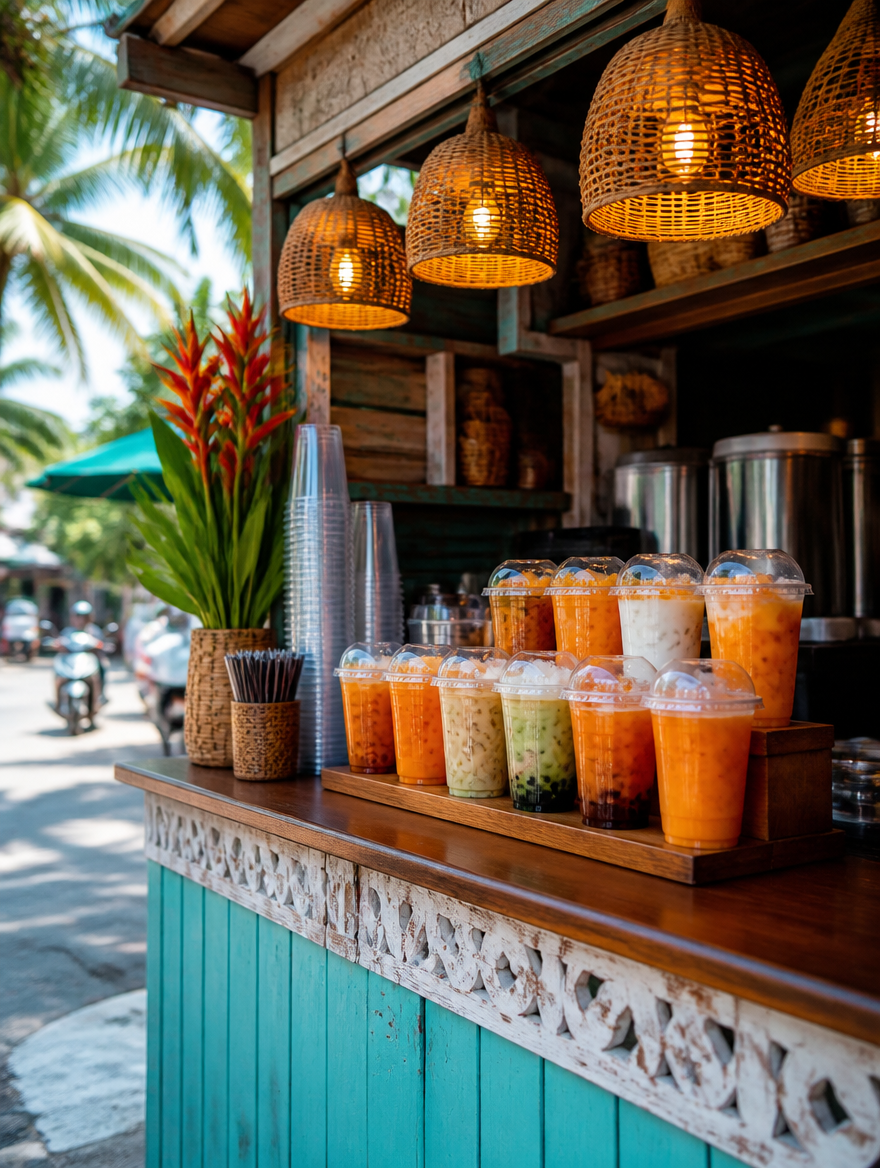
Thai iced tea is as much a part of national identity as tom yum or motorbike taxis. That's exactly why the appearance of hundreds of 蜜雪冰城 / Mixue and 霸王茶姬 / Chagee outlets on Bangkok's streets feels almost like cultural provocation — and, judging by the pace of openings, a fairly successful one.
A scale local chains aren't used to
Mixue is the world's largest drinks-and-ice-cream chain by outlet count, surpassing 45,000 locations globally by 2024, built mostly on an aggressive low-ticket franchise model (drinks often cost the equivalent of one or two dollars). In Thailand, the company opened more than a thousand outlets within a few years — from Bangkok to provincial towns that premium local tea brands typically can't reach because the unit economics don't work.
Chagee — a different bet: premium positioning and an IPO
霸王茶姬 / Chagee chose the opposite strategy — positioning closer to the premium segment, built around "new Chinese tea" (using actual loose-leaf tea rather than tea concentrates) and an aesthetic closer to a specialty coffee shop than a classic milk-tea kiosk. The company listed on Nasdaq in 2025, and one of its stated priorities for the capital raised is accelerated international expansion, with Thailand and the rest of Southeast Asia near the top of its priority-market list.
Why Thailand specifically
For Chinese tea chains, Thailand is close to an ideal proving ground: a tropical climate with year-round demand for cold drinks, a street-food culture already comfortable with kiosks and small outlets, and a consumer already familiar with the flavored-tea format (Thai milk tea is a direct cultural cousin of Chinese milk tea). At the same time, competition from local chains like ChaTraMue forces Chinese players to do more than copy the format — they have to adapt flavor profiles to Thai preferences, meaning sweeter, richer flavors and local fruit toppings.
Franchise economics as a scaling weapon
The key difference from local models is supply standardization. Mixue runs its own factories producing syrups, toppings and pre-made bases, letting it hold per-outlet costs at a level independent Thai operators sourcing from scattered suppliers simply can't match. A franchisee gets not just a brand but a ready-made production chain — and that has been the decisive factor behind the speed of expansion.
What it means for local business and investors
The wave of Chinese tea chains creates a double effect: pressure on independent local operators who lack access to that kind of scale economics, but also rising demand for local ingredients (tropical fruit, local tea leaf), cold-chain logistics and trained staff — opening a niche for Thai B2B suppliers.
Just how big is this market, really
Industry consultants value Thailand's takeaway-drinks market at billions of baht in annual turnover, which is exactly why dozens of local and international chains — from Korean ice-cream chains to Vietnamese coffee shops — are fighting for a piece of it simultaneously. The arrival of Chinese players has only accelerated an already fast rotation of formats in this market.
**Local brands aren't giving up without a fight.**
It would be an exaggeration to say Thai chains are simply ceding the market. ChaTraMue and other local brands hold a card the newcomers don't have — a decades-long emotional bond with consumers and the status of "authentic" Thai flavor, which the Chinese competitors' marketing rarely even tries to contest: Mixue and Chagee deliberately avoid positioning themselves as "just like the local tea," instead carving out a separate niche — an affordable dessert or a premium tea ritual, rather than a replacement for a traditional cup of iced tea from the corner stall.
**Saturation as the next problem.**
At current opening speeds — hundreds of outlets a year from a single chain — Bangkok and major provincial cities risk running into the classic cannibalization problem, where new outlets of the same brand start taking revenue from each other rather than from competitors. Some franchise-market analysts have already noted a slowdown in Mixue's new-outlet openings in the second half of 2025 for exactly this reason, though the company doesn't disclose official statistics specific to the Thai market.
For anyone who wants to understand the franchise model and supply chain firsthand rather than from open sources, business tours in Thailand include visits to production and distribution centers.