Blog
Sungrow: The Solar Inverter Maker Where Exports Now Outpace the Home Market
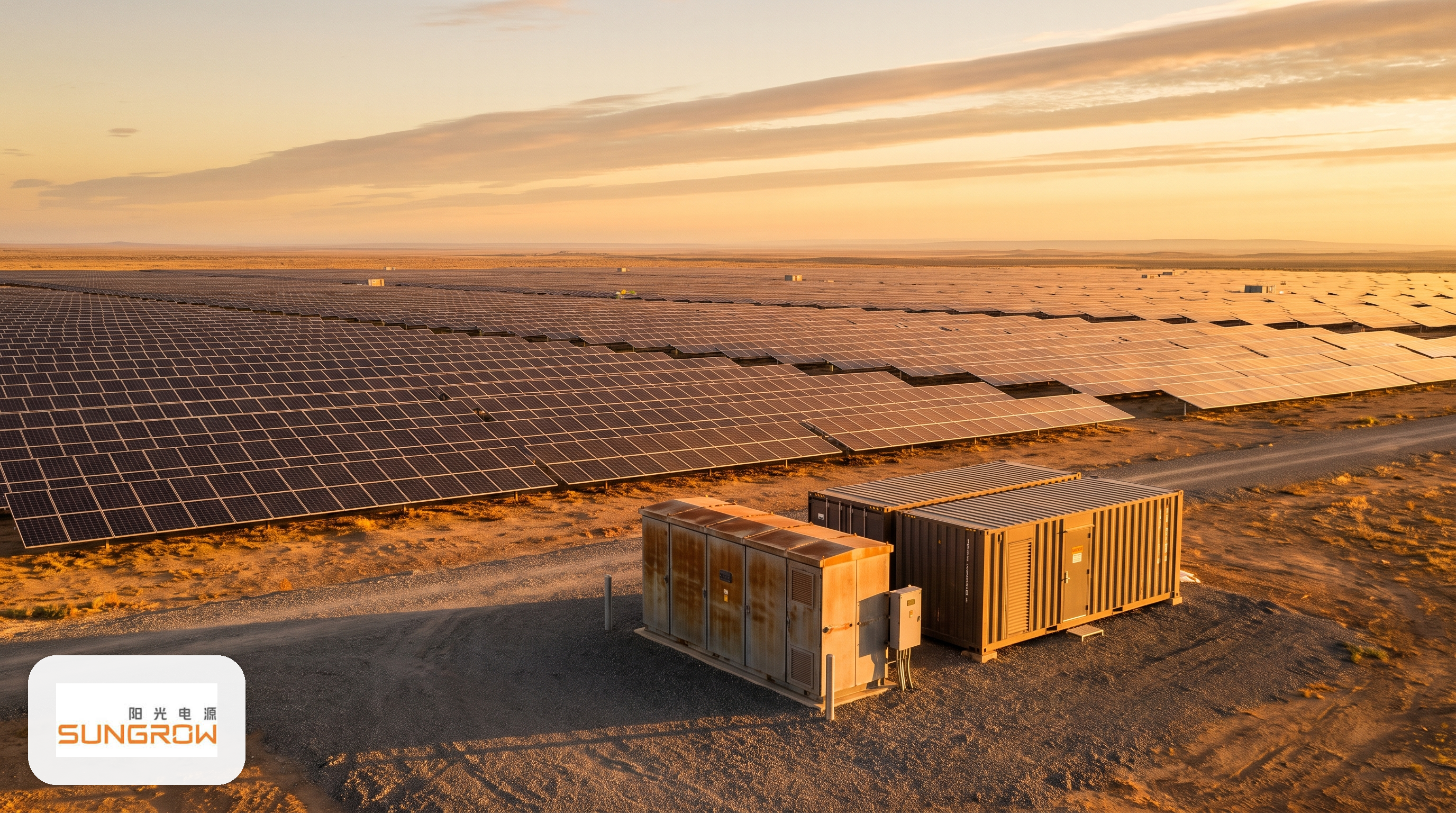
Sungrow / 阳光电源, one of the world's two largest solar inverter manufacturers alongside Huawei, rarely makes headlines as loudly as automakers or internet giants, even though companies like this determine how fast the world can scale up solar power capacity. 2025 was the year overseas sales definitively became the company's primary revenue source.
Revenue grows, business mix shifts
For full-year 2025, Sungrow's revenue reached RMB 89.184 billion (about $12.95 billion) — up 14.55% year-on-year, with net profit rising 21.97% to RMB 13.461 billion. But the more interesting story is what that total is made of: for the first time in the company's history, energy storage systems overtook solar inverters as the largest business segment, generating RMB 37.287 billion in revenue (+49.39% year-on-year) and accounting for 41.8% of the total. PV inverter revenue, meanwhile, came in at RMB 31.136 billion, with global shipments of 198 GW and an estimated 30% global market share.
Exports as the foundation of the business
Sungrow's overseas revenue for 2025 grew 48.7% to RMB 53.992 billion — now 60.5% of total company revenue, meaning more than half of the business is generated outside China. According to Wood Mackenzie, Sungrow and Huawei held the top two spots among global solar inverter manufacturers in the first half of 2025 — a rare case of two Chinese companies effectively splitting leadership of an entire equipment category worldwide.
Why storage is overtaking inverters
The shift toward energy storage reflects a broader industry change: where the main task used to be simply connecting a solar panel to the grid via an inverter, growing demand for energy independence and load-peak smoothing is now making battery storage systems not an add-on but a standalone, higher-margin product in their own right. For industrial buyers and energy companies, this means a supplier like Sungrow is offering not a single component but a complete solution — from generation to storage.
What it means for overseas buyers
That scale of overseas sales points to mature export infrastructure: Sungrow's service centers, local partnerships and supply logistics are already built for dozens of markets simultaneously, not just pilot shipments. How Chinese brands systematically break into global markets — from energy to consumer goods — is covered on the Chinese Global Brands Expedition, and the company's profile is available on the Sungrow catalog page.
Why storage is a more defensible business
Inverters compete mainly on price and compatibility with different panel types — a market with relatively low barriers to entry for new players and, consequently, constant margin pressure. Energy storage systems, by contrast, require expertise across several adjacent fields at once — battery chemistry, charge/discharge management software, grid integration — which makes the segment less exposed to price wars and explains why it's showing faster revenue growth at comparable physical shipment volumes.
Exposure to other countries' trade policy
The growing share of overseas sales makes Sungrow more exposed to trade barriers outside China: anti-dumping investigations and additional tariffs on Chinese solar equipment have already been imposed in several countries, including the US. A company this dependent on exports has to balance expanding its sales footprint against the risk that any single market could suddenly close or become more expensive due to new trade restrictions — hence the strategy of diversifying supply across many regions at once rather than concentrating on one large market.
Sources
2025 financial figures drawn from pv magazine, Energy-Storage.News and Wood Mackenzie/Solar Power World Online coverage.