Blog
Why benchmark tours to China work
Most Russian companies exploring China start the same way: a stand at an industry expo, a stack of business cards, a handful of WeChat contacts that go cold within a month. It feels like progress, but it rarely changes how a company actually buys, partners or benchmarks against Chinese competitors.
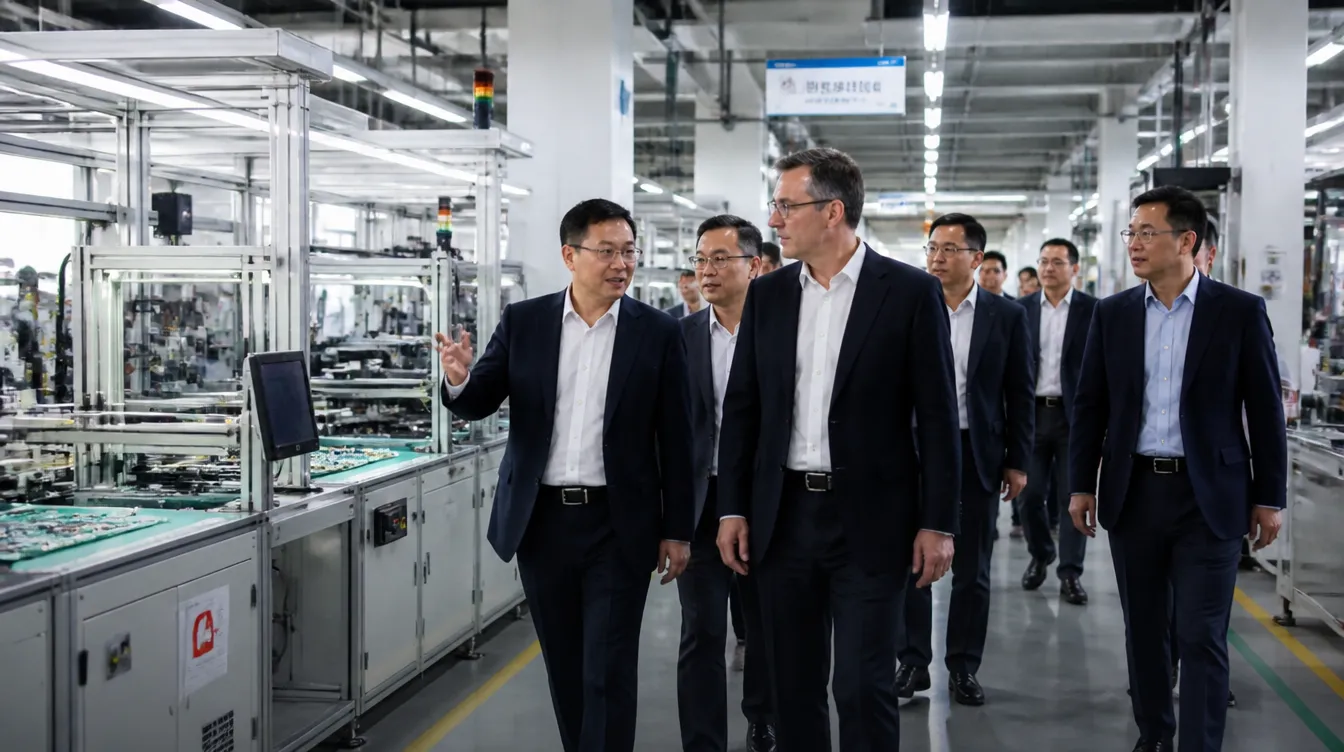
A benchmark tour flips the format. Instead of a booth, a delegation walks the floor of a working plant — sees the line speed, the automation level, the quality control stations, and the people running them. Instead of a pitch deck, there's a conversation with a plant manager or a technical director who answers real questions on the spot: cycle times, defect rates, how a supplier switch was handled, what broke in the first six months of a new line.
That access changes decisions in a way marketing material cannot. A delegation that has seen three competing approaches to the same production step — inside three different facilities, in the same week — comes home with a benchmark, not a brochure. They know which claims in a supplier's deck are real and which are aspirational, because they have a working reference point.
The logistics matter as much as the access. A good tour sequences companies so each visit builds on the last: general assembly before component suppliers, an established manufacturer before a scaling startup. It handles the parts a delegation cannot arrange on its own — plant-level access agreements, an interpreter who understands the technical vocabulary of the sector, a schedule tight enough to see six companies in five days without any of them feeling rushed.
That is the actual value: not a trip to China, but a structured, comparable look at how an industry really works there — the kind of information that shapes a sourcing decision, a joint venture, or a decision not to proceed at all.
Ready-made routes by industry are in the expeditions section, and cards for companies that have already hosted delegations are in the catalogue.