Blog
Aging Japan as a Testing Ground for Agetech Business
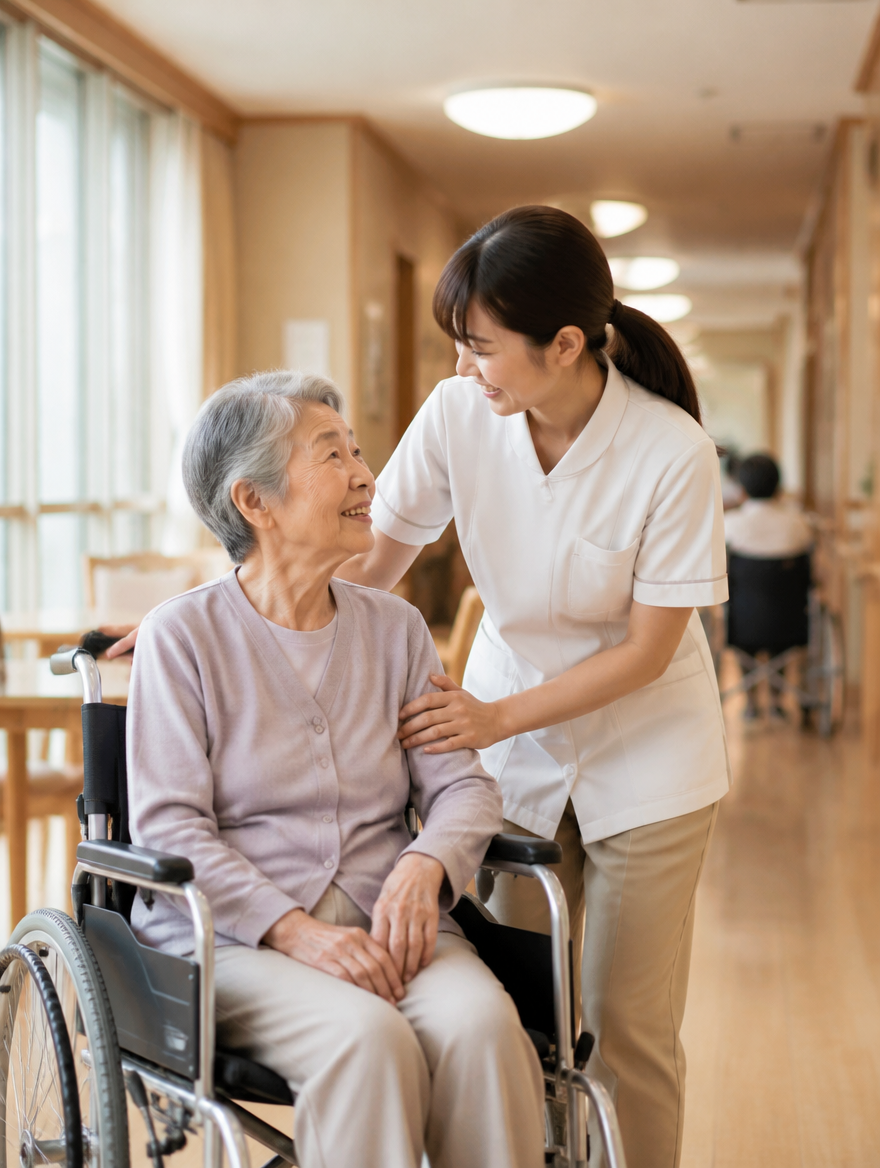
At a care home outside Osaka, a staff member straps on a lightweight exoskeleton before lifting an elderly resident out of bed — an ordinary scene at a Japanese care facility, still a rarity almost everywhere else. Japan didn't choose to become a testing ground for aging technology; demographics forced its hand earlier than anywhere else.
Demographics with no room to wait
According to government statistics, the share of Japan's population aged 65 and over exceeds 29% — the highest figure among major world economies. This isn't a future projection; it's an already-realized fact the healthcare and social-care system has to work with right now. At the same time, the country faces a chronic labor shortage specifically in elder care — younger generations gravitate toward less physically demanding, better-paid jobs, and Japan's immigration policy has traditionally been more conservative than other developed economies.
That combination — acute need plus a shortage of hands — made Japan not just a market but an actual laboratory for what's increasingly called "agetech" in the West: technology for elderly people and the people who care for them.
From exoskeletons to companion robots
Japanese companies have spent years developing solutions that remain niche experiments elsewhere: lightweight exoskeletons for care-home staff that reduce back strain when lifting patients, robotic sleep and movement monitoring systems that alert staff to a fall risk before it happens, and companion robots aimed at reducing social isolation among elderly people living alone. The key difference from purely medical gadgets is that these technologies are designed from the start around a real staffing shortage, not as an add-on service for those who can afford premium care.
The government actively supports the sector through subsidies for adopting technology at long-term care facilities — creating stable domestic demand and letting companies test equipment in real conditions at a scale unavailable to startups in countries with more fragmented elder-care systems.
Why this matters for the rest of Asia
China, South Korea, and Thailand are on a similar demographic trajectory, 10-20 years behind, and Japan's agetech experience is increasingly becoming a reference point for these markets — not just on the technology, but on how to structure long-term care financing, insurance, and equipment certification standards. For businesses, that means solutions proven and certified in Japan today have a real shot at export into neighboring regional markets over the next decade, rather than staying a local quirk of one aging economy.
What investors and partners should weigh
Agetech in Japan isn't one market — it's several parallel niches at different maturity levels: medical equipment is tightly regulated and requires a long certification cycle, while "everyday" solutions — smart sensors, remote monitoring devices for family members — move faster with fewer regulatory hurdles. That difference determines how quickly you can realistically expect to enter the market and whether a medtech manufacturer or a consumer electronics maker is the better partner.
The role of large private care-home operators
Beyond government programs, large private operators running dozens or hundreds of care facilities nationwide play a major role in testing new technology, since they can deploy new equipment at a scale no individual startup could reach on its own. Partnering with these operators, rather than selling directly to end consumers, is usually the real path to market for new agetech solutions — a pilot at a handful of facilities first, then network-wide rollout once effectiveness is confirmed.
Takeaway
Japan's agetech experience is worth studying not as a curiosity of an aging nation but as a working model of what the whole region will soon face. Anyone considering this sector for investment or partnership would benefit from seeing care facilities and relevant manufacturers in person as part of a themed trip, rather than building forecasts off slide decks and brochures.