Blog
GITEX in Dubai: Why the Middle East Became an Alternative Tech Showcase
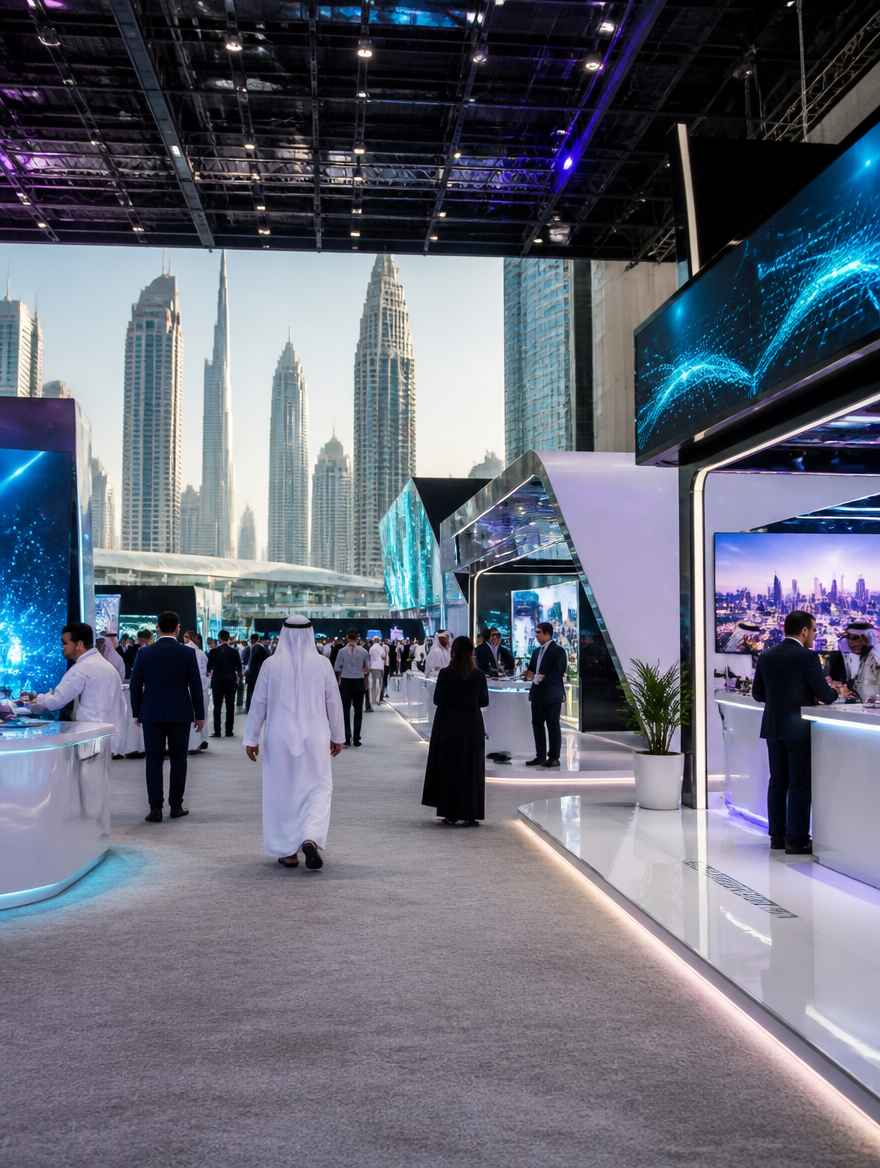
Ten years ago, GITEX in Dubai was seen as a big but still regional Middle Eastern tech show. Walk into the Dubai World Trade Centre during GITEX Global today and you'll find Huawei booths next to Chinese AI startups, Indian SaaS companies, and European security-systems developers in the same hall — often talking to each other, not just to local buyers.
A scale catching up to Asia's industry fairs
According to organizer figures, GITEX Global 2025 drew over 6,800 exhibiting companies and roughly 180,000 visitors from more than 180 countries — numbers that put the show in the same league as the world's largest tech events, not just regional Gulf gatherings. The key difference from the Canton Fair or China's industry-specific shows is that GITEX is, by nature, not a manufacturing venue but a technology and investment one: it's less about ordering a batch of goods and more about partnerships, distribution, and entering the Middle East, Africa, and South Asia markets simultaneously.
Why Dubai became this convergence point
The UAE has built itself a role as neutral ground between East and West: the country is equally open to Chinese tech companies looking for new markets amid tightening trade restrictions with the US and Europe, and to Western investors who want a regional presence without going directly into China. GITEX is the showcase for exactly that role — at one event you can watch a Chinese drone manufacturer look for an African distributor while an Indian fintech company pitches a solution to Gulf banks.
An added factor is the UAE's own growing tech ecosystem: investments in data centers and cloud services — often discussed in connection with players like Alibaba Cloud expanding into the region — create local demand that the fair itself serves, connecting infrastructure suppliers with local integrators and government buyers.
How GITEX differs from China sourcing practice
For anyone used to the Canton Fair format — arrive with a list of booths and settle on price on the spot — GITEX works differently. Decisions here move slower and often go through several rounds of negotiation after the fair, since it's usually not a one-off goods purchase but more complex deals: distribution agreements, integrations, reseller contracts. Standing at a booth matters less for closing an instant sale and more for making the shortlist of partners you'll keep talking to after everyone flies home.
A second nuance: the audience mix is noticeably more geographically diverse than at Asian trade shows — a single booth might see a buyer from Saudi Arabia, a distributor from Kenya, and an investor from London in the same afternoon, making GITEX a convenient testing ground for a product across several markets at once, not just the UAE.
Government backing as an amplifier
A separate reason GITEX keeps growing specifically in Dubai rather than elsewhere in the region is direct government involvement: UAE authorities routinely use the fair as a showcase for national tech initiatives, from state AI strategies to startup support programs, and bring in relevant ministers and sovereign funds to take part in the business program directly. For a foreign company, that means the booth next to a commercial partner might well belong to a representative of a sovereign investment fund eyeing the same product for a national project — a combination rarely found at purely industry-focused trade shows.
Is it worth going instead of Chinese fairs
GITEX doesn't replace the Canton Fair for anyone hunting a manufacturing partner — these are fundamentally different kinds of events. But for tech companies and distributors wanting to enter the Middle East, Africa, and South Asia at the same time, GITEX is often more efficient than sequential visits to each individual country. Anyone treating the fair as part of a broader regional entry strategy would do well to fold GITEX into an itinerary alongside visits to local distributors and integrators, rather than limiting the trip to booth conversations alone.